History of the paper bag
1852 Francis Wolle invents a paper bag machine (shaped like an envelope)
1870 Margaret Knight invents a new machine that makes flat-bottomed paper bags
1883 Charles Stilwell invents a machine that adds pleated sides, making the bags easier to fold. Also called S.O.S bags, for being “self-opening sacks.”
1890 William Purvis, a black man, improves on the machinery, which has become the most common patent used.
1912 Walter Deubener adds carrying handles and develops a bag design that can carry 70 pounds of groceries (versus the more common 10 lbs).
1950s paper bags become ubiquitous in both retail and grocery shops due to their design and inexpensive production.
1960s Paper bags are used as artistic platform for retail branding
1970s Plastic bags replace paper bags as retail give-away bag due to cheaper methods of production
2000s Plastic bags begin being banned in states due to negative impact on environment (as findings estimate they will take thousands of years to decompose)
2013 Natural, sustainable materials such as cotton, jute, and leather bags appear in small numbers on the market as an alternative to plastic vs. paper bags model
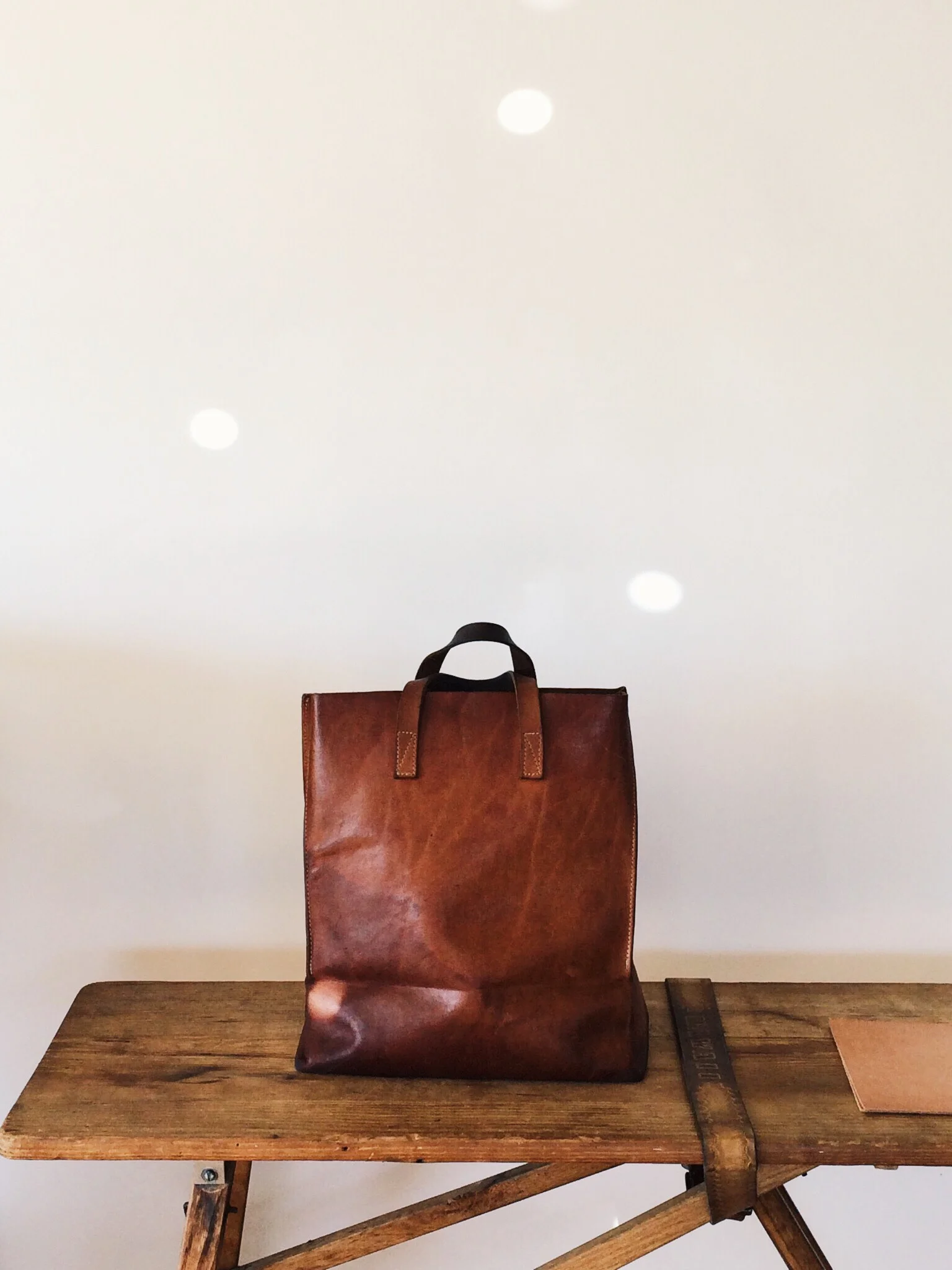
We've taken this time-tested design and refined it by using a material that is all natural, durable, and sustainably sourced (a natural bi-product of the meat industry). We started this company with a leather version of a paper bag because we wanted to do our part to bring back what seems like a better time in this country: pre-plastic American times when low cost, cheap disposable goods didn’t win the most votes. So, like most of our days, we will keep on keeping doing what can do to offer the exact opposite: real, raw, natural, well made goods using locally and domestically sourced materials.